
We are a renovation contractor, so read this knowing that. It is the checklist we would want any client to use on us, and the one we would use ourselves if we were hiring someone for our own home.
Most renovation problems in Dubai are not caused by bad luck. They come from a handful of things that could have been checked before signing: a licence that does not cover the work, a quote that leaves out the expensive parts, a payment schedule that pays too much too early, or approvals nobody took responsibility for.
1. Check the trade licence yourself
Every contractor in Dubai needs a valid trade licence, and you can check it without relying on a copy they send you. Dubai Economy and Tourism provides a public licence information search for Dubai-registered businesses.
Check three things:
- It is active and not close to expiry.
- The licensed activities cover the work, such as building, fit-out or renovation contracting, rather than only maintenance or trading.
- The legal name matches the name on your quote, contract and invoices.
2. Ask for insurance
Ask for a certificate for third-party liability and, on larger jobs, contractor’s all-risk cover. Many buildings and communities require it before they issue a NOC, so a contractor without it may not be able to start anyway.
3. Agree who handles approvals
Most structural, plumbing, electrical and outdoor work needs a community or building NOC, and some needs a Dubai Municipality permit. Your contract should say who applies, who pays the fees, and that work does not start until approval is in hand. Our guides to villa permits and apartment NOCs explain what needs what.
4. Compare quotes line by line
The cheapest total is not always the cheapest job. A low quote often gets there by leaving things out or pricing them as provisional sums that grow later. Put three quotes side by side and check each covers the same scope:
| A good quote states | Why it matters |
|---|---|
| Scope broken down by room or area | You can see what is and is not included |
| Materials by name, or a clear allowance | Stops a cheaper product being substituted |
| Provisional sums, with amounts | Shows where the price could still move |
| Exclusions, listed | The honest quote tells you what it does not cover |
| Approvals and who handles them | Avoids stoppages mid-project |
| Debris removal and site protection | Often missed, always needed |
| Programme and payment schedule | Tells you when and how much |
| Warranty terms | What happens if something fails |
Our swimming pool cost guide shows how this works on a real quote.
5. Agree a fair payment schedule
Payments should follow progress. A reasonable structure is a modest advance, staged payments tied to clear milestones such as demolition complete, first fix complete and tiling complete, and a final payment held back until snagging is closed. Be wary of anyone asking for most of the money before work starts.
6. Get the warranty in writing
A proper warranty is written, says what it covers and for how long, and treats waterproofing and structural work separately from finishes. At handover, you should also get a record of what was installed and where, including hidden pipework and electrical runs.
7. See their real work
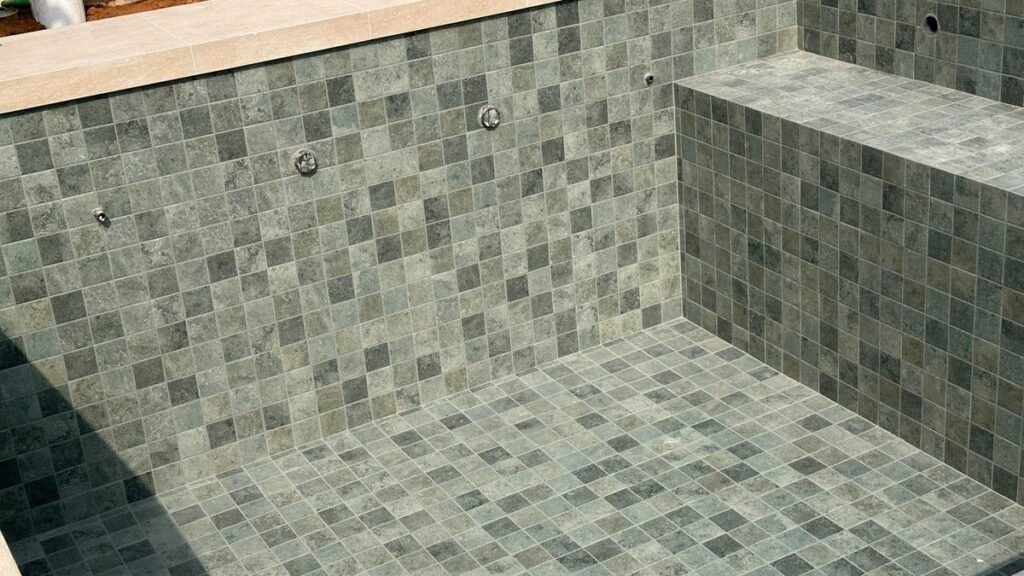
Ask for photos of their own projects, including work in progress, not just finished shots. The pool at the top of this page, photographed mid-tiling before the water went in, is the kind of evidence that tells you a contractor actually builds what they sell.
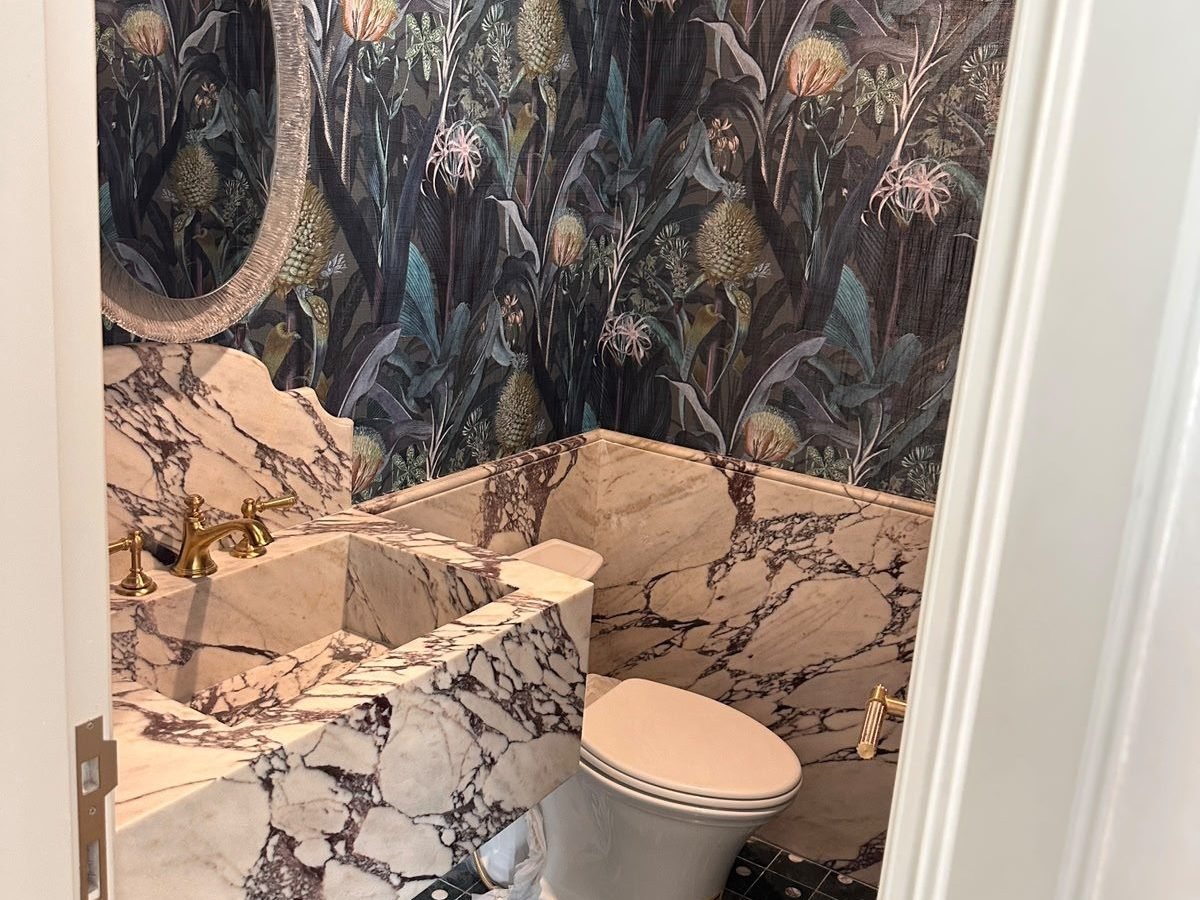
When you look at finished work, look at the details: joint lines, how tiles meet at corners, how neat the silicone is, whether doors close cleanly. Those small things show how a contractor works when nobody is checking. If you can, ask to speak to a past client or see a completed project in person.
Red flags
- Cash only, or payments to a personal account.
- No written contract, or a one-line quote.
- They will not name the materials they plan to use.
- “You don’t need a permit for that” on structural, plumbing or layout changes.
- Pressure to start before the NOC is issued.
- A quote far below the others, with large provisional sums.
- The licence name does not match the quote or contract.
Frequently asked questions
How do I check if a renovation company is licensed in Dubai?
Use Dubai Economy and Tourism’s public licence information search, and check the licence is active, covers renovation or fit-out work, and matches the company name on your contract.
How many quotes should I get?
Three is usually enough to see where the market sits, as long as they cover the same scope. More than that tends to add confusion rather than clarity.
How much should I pay upfront?
A modest advance, with the rest tied to completed milestones and a final amount held until snagging is done. Avoid paying the majority before work starts.
Should the contractor or the owner apply for the NOC?
Usually the contractor prepares and submits it on the owner’s behalf, but the contract should say so clearly.
Looking for a contractor you can check?
Perfect Choice Technical Services is a Dubai renovation and fit-out contractor handling design, approvals and execution under one roof. Put us through the same checks. We will visit the property, walk you through our itemised quote line by line, and show you our work.