
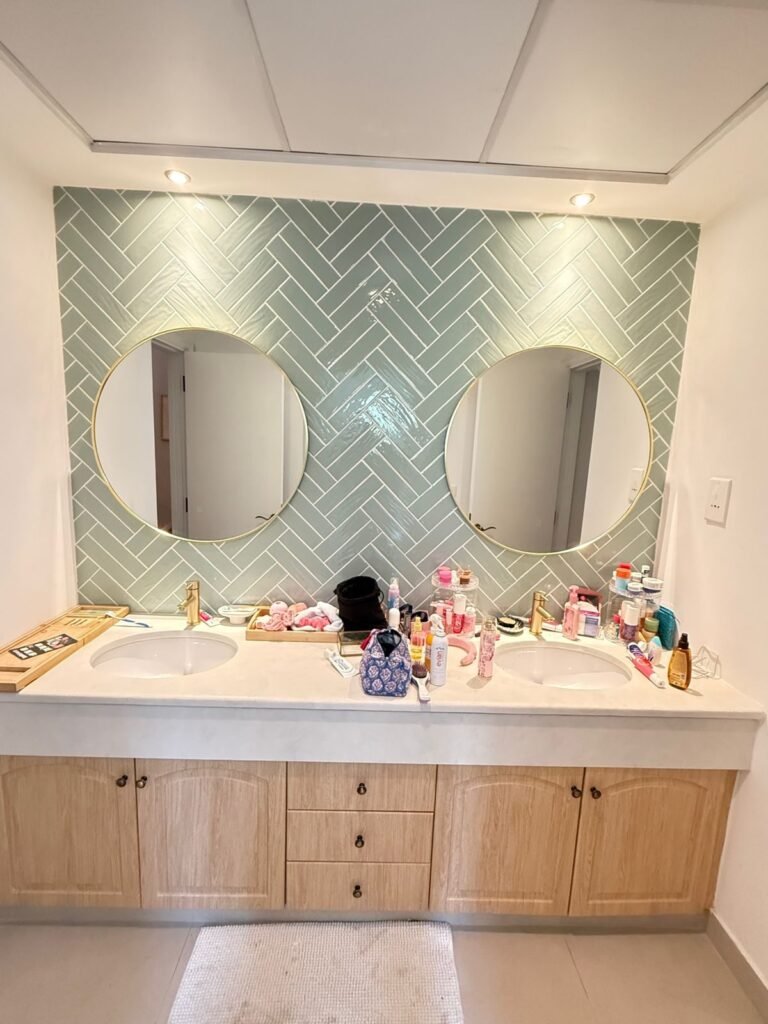
A large part of Dubai’s villa stock is now old enough to need real work rather than a repaint. Communities such as The Springs, The Meadows, Arabian Ranches, Jumeirah Park and parts of Al Barsha were handed over between roughly 2004 and 2014, which puts many of those homes between twelve and twenty two years old.
That is precisely the age at which kitchens, bathrooms, air conditioning and waterproofing stop being cosmetic questions. This guide covers what these villas actually need, the order we would tackle it in, and the approvals that come with a community villa rather than a standalone plot.
What ages first in a Dubai villa
The Dubai climate is hard on specific things, and it is consistent about which ones.
| Element | Typical issue at 12 to 20 years | Why it matters |
|---|---|---|
| Air conditioning | Ducted split systems near the end of service life, ducting leaking cooled air into ceiling voids | The largest single driver of a summer DEWA bill |
| Bathroom waterproofing | Original membranes failing at the floor to wall junction, staining ceilings below | Damage appears one floor down, long after the cause |
| Kitchen joinery | Swollen carcasses under the sink, tired hinges, dated worktops | Usually the reason the whole kitchen gets replaced |
| External paint and render | Chalking, hairline cracking on south and west elevations | Drives the first impression for buyers, tenants and valuers |
| Windows and doors | Failed seals, blown double glazing units, sliding doors off track | Heat gain, dust ingress, noise |
| Terrace and roof waterproofing | Ponding, failed junctions around drains | The most expensive problem to find late |
None of that is exotic. It is simply what happens to a house in this climate after fifteen years of sun, dust and humidity.
The order we would fix things in
Owners usually want to start with the kitchen, because that is the room they look at. We would start one layer down.
- Survey the services. Air conditioning, distribution board, pipework, drainage. If any of these are due, they set the programme, because they run through the ceilings and walls everything else is attached to.
- Waterproofing in wet areas and terraces. It is invisible and it is the one thing you cannot retrofit later without taking the finishes apart again.
- Windows, doors and external envelope. Anything that affects heat, dust and water getting in.
- Kitchen and bathrooms. The rooms that carry the budget and the resale story.
- Floors, ceilings, lighting and paint. The layer everybody sees, done last so it is not damaged by the work above.
- Outdoors. Garden, terrace, pergola, pool. See our landscaping guide and outdoor living guide.
If the budget will not stretch to all of it, the honest advice is to do the first three properly and delay the fifth. A beautiful villa with a failing air conditioning system is a more expensive problem than a plain villa with new services.
Community villas come with a second layer of approval
On a standalone plot you deal with Dubai Municipality. In a master community you deal with the developer first. Emaar, Nakheel and the other master developers issue their own NOC before Dubai Municipality will look at anything structural, and they also govern what you may do to the exterior.
Expect community rules to cover:
- Facade changes. Colour, cladding, render and anything visible from the street is usually controlled to keep the community consistent.
- Boundary walls, gates and carport structures. Height and design limits are common.
- Extensions and any change to built-up area. These need the developer NOC before the municipality application, and older villas may need engineering checks for the additional load.
- Working hours, access and waste. Enforced by community security, and worth knowing before you plan a programme.
Dubai Municipality publishes the building permit procedures by building type, with residential villas as their own category. Our permits guide covers what actually triggers an approval and what does not.
One more rule worth naming, because it comes up in older villas that have been rented for years: unauthorised internal partitions are not a grey area. Dubai’s shared accommodation law, in force since 26 August 2026, sets occupancy and permit rules, and The National reported fines from Dh500 up to Dh1 million for repeat offences. If a villa you have bought contains partitions added by a previous occupant, removing them is part of the renovation, not an optional extra.
What actually changes the value of an older villa
Working on villas of this age, the upgrades that consistently change how a home is perceived are less glamorous than the ones people plan first.
- Continuous flooring. Replacing several different original floor finishes with one large-format material makes a villa read as renovated in every photo.
- A single-storey layout fix. Most villas of this era have a closed kitchen and a formal reception nobody uses. Opening the kitchen to the family room is often the highest impact change in the house.
- Bathrooms brought up to current expectations. Walk-in showers, wall-hung sanitaryware, better lighting and ventilation.
- Lighting and ceilings. Cove detail and proper layered lighting change a room more cheaply than new joinery.
- The approach and the garden. The entrance, the paving and the planting are the first and last thing anyone sees.
Our rent or sell guide covers how to decide which of those is worth doing when the villa is an investment rather than a home.
Renting the villa out afterwards
If the plan is to let the property, the condition of the building is now part of the rental conversation. The Dubai Land Department’s Smart Rental Index introduced a building classification with a star rating drawn from a long list of criteria including age, quality, maintenance and amenities. In practice, keeping a property in good condition is no longer only a marketing question.
Common questions
Is it worth renovating a 15-year-old villa or should I buy newer?
Older villas in established communities usually sit on larger plots with mature landscaping and a better location than an equivalent budget buys in a new development. The trade is that you are buying the renovation as well as the house. If the purchase discount covers the work with a buffer, the older villa usually wins.
What surprises come up most often in villas of this age?
Failed waterproofing under bathroom floors, air conditioning ducting in poor condition, and previous modifications carried out without approval. All three are found once finishes come off, which is why we hold a contingency and why we survey before quoting.
Can I live in the villa during the work?
For a cosmetic refresh, sometimes. For anything involving MEP, wet areas or ceilings, we would not recommend it. Dust, noise, water shutoffs and access make it impractical, and it usually slows the programme enough to cost more than the alternative accommodation.
Do I need the developer NOC even for internal work?
For purely cosmetic internal work, usually not, though community access rules still apply. For anything structural, external or affecting built-up area, yes, and the developer NOC comes before the municipality application.
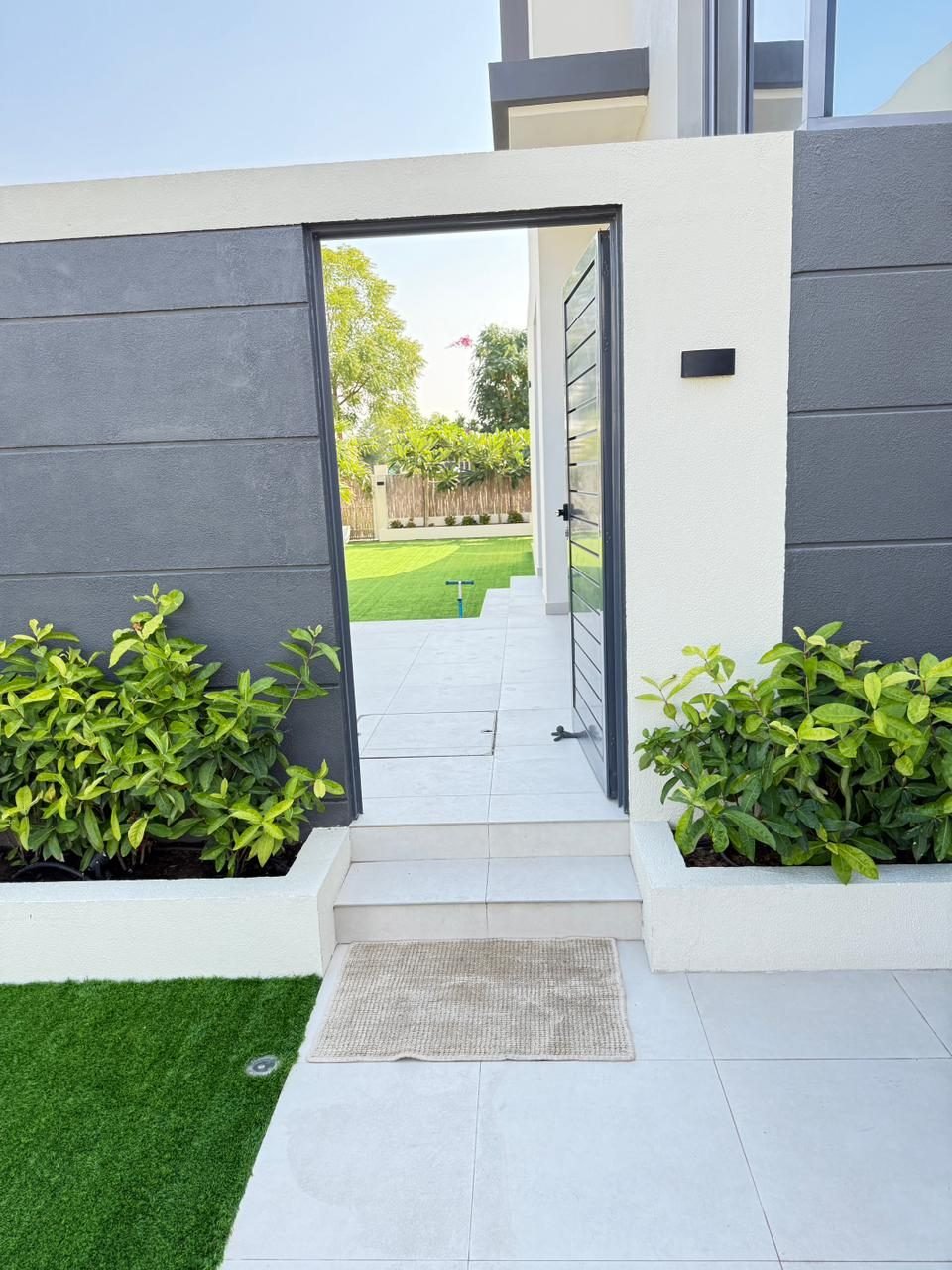
Planning work on an older villa?
We renovate villas of exactly this vintage across Dubai, and we would rather tell you the services need replacing before you spend the budget on joinery.
We will survey the property, report what we find behind the finishes, and give you an itemised quote as part of our interior renovation work in Dubai, with garden, terrace and pool work priced separately under outdoor renovation.