
In a villa, your approvals are mostly with the developer and Dubai Municipality. In an apartment, there is another party with a say in almost everything: the building itself.
Building management or the owners association controls who comes in, when they can work, how materials get up, and what you are allowed to change. Getting that right before any contractor arrives is the difference between a smooth renovation and one stopped halfway through. This guide explains how it works.
Who has to approve what
| Type of work | What it usually needs |
|---|---|
| Painting, light fittings, curtains and blinds, replacing non-structural flooring | Usually no formal approval, but the building still controls contractor access |
| Kitchen or bathroom alterations, plumbing or electrical changes | Building management or owners association NOC |
| Moving or removing walls, structural or major works | Building NOC plus a Dubai Municipality permit |
Rules vary by building and developer, so treat this as a starting point and confirm with your building before you plan the scope.
How the building NOC works
Almost every Dubai apartment building requires a No Objection Certificate from building management or the owners association before renovation starts. The process usually looks like this:
- Get the building’s fit-out or renovation guidelines. Most buildings have a written document covering what is allowed, working hours, and what the application needs.
- Prepare the application. Typically a description of the scope, drawings for anything beyond cosmetic work, and your contractor’s trade licence and insurance.
- Pay the refundable deposit. Buildings usually take a deposit to cover any damage to lifts, corridors or common areas. The amount varies by building.
- Wait for approval. Building NOCs commonly take 5 to 15 working days. Work that needs a Dubai Municipality permit typically adds 2 to 4 weeks.
Approvals can run in parallel with design and ordering materials, so they do not have to add to the overall timeline if you start them early.
Working hours, lifts and deliveries
Buildings enforce strict site rules, and breaking them is how renovations get stopped. Expect:
- Working hours, commonly around 8am to 6pm on weekdays, with noisy work restricted further in many buildings.
- Lift protection and booking for moving materials and removing debris.
- Dust containment and rules about what can be left in corridors.
- Debris removal to an approved point, never through common areas unprotected.
Buildings can stop work and remove contractors who break the rules, and penalties for unapproved works can be significant. A contractor who knows how Dubai buildings operate will plan the programme around these limits from day one.
What you usually cannot change
Some things belong to the building rather than your unit, and are normally off limits or tightly controlled:
- The facade, windows and balcony enclosure.
- Structural walls, columns and shafts.
- Fire systems, including sprinklers and detectors. Anything near them has to stay compliant.
- The central AC or chiller connection. You can often change grilles and thermostats, but not the system itself.
- Moving wet areas. Relocating a bathroom or kitchen over a neighbour’s living space is often restricted.
Tenants and owners
If you rent, you need the landlord’s written consent before anything changes, and in most buildings the NOC application comes from the owner. Agree in writing who pays, what happens to the upgrades when you leave, and whether the unit has to be returned to its original state.
Apartment upgrades that make the biggest difference
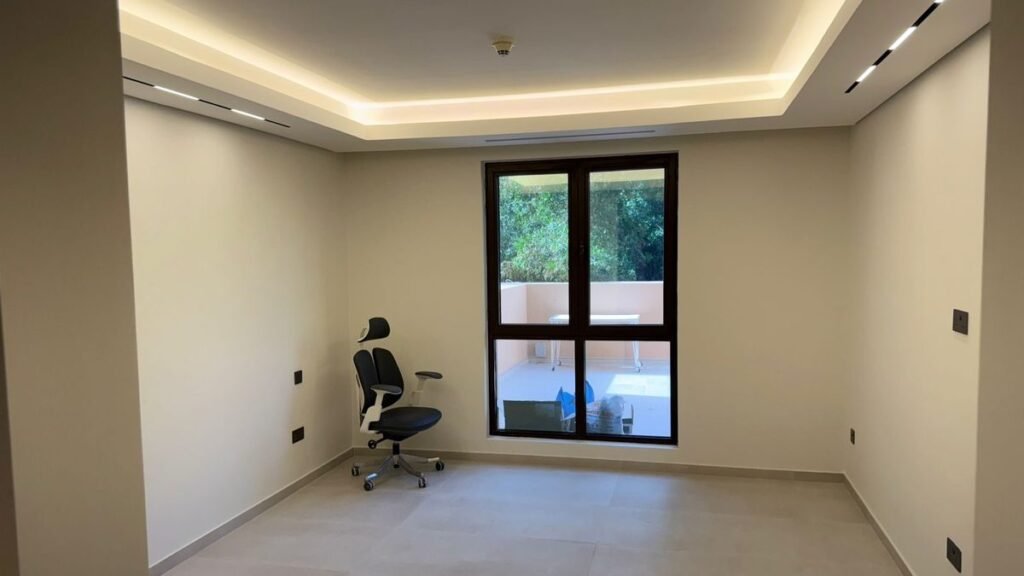
- Lighting. Cove ceilings and recessed lighting, like the bedroom at the top of this page, transform a room without touching walls or plumbing.
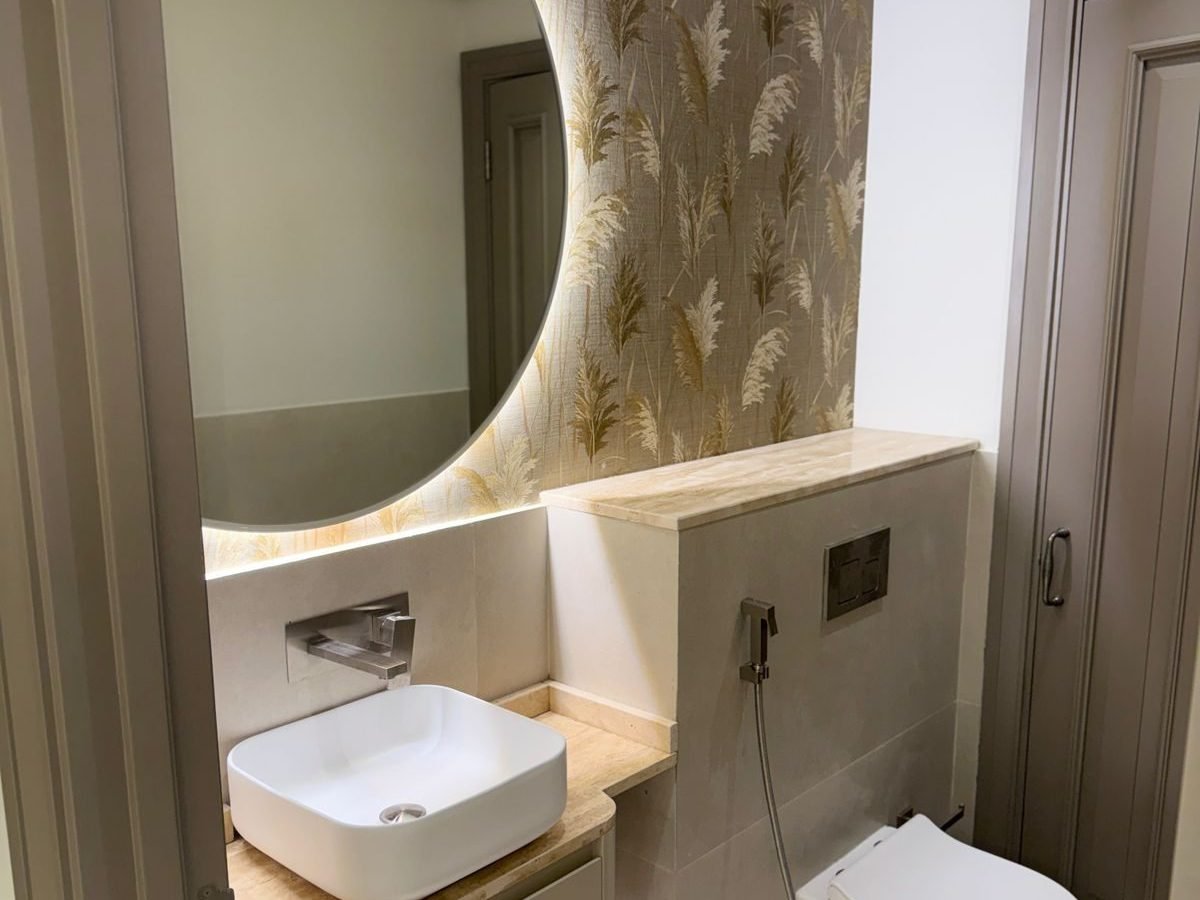
- Bathrooms in the same layout. New tiles, fittings, glass and proper waterproofing, keeping drainage where it is. See our bathroom renovation guide.
- Kitchen fronts and worktops. Replacing doors, worktops and appliances on existing carcasses is a large visual change with minimal approvals. Our kitchen guide explains the options.
- Flooring. New porcelain throughout, or a seamless finish such as microcement, where the building allows it.
Planning checklist
- Get your building’s renovation guidelines before you design anything.
- Confirm which parts of your scope need a NOC and which need a Dubai Municipality permit.
- Check your contractor’s trade licence and insurance meet the building’s requirements.
- Plan the programme around permitted working hours and lift bookings.
- Budget for the refundable deposit.
- If you are a tenant, get the landlord’s written consent first.
Frequently asked questions
Do I need a NOC to renovate my apartment in Dubai?
For anything beyond cosmetic work, almost always. Even painting usually requires your contractor to be registered for building access.
How long does apartment renovation approval take?
A building NOC commonly takes 5 to 15 working days. Structural work needing a Dubai Municipality permit typically adds 2 to 4 weeks.
Can I remove a wall in my apartment?
Only if it is not structural, and only with building approval. Structural walls need an engineer’s assessment and a Dubai Municipality permit, and many buildings do not allow it.
Can a tenant renovate an apartment?
Only with the landlord’s written consent, and usually with the landlord applying for the NOC.
Planning an apartment renovation?
We handle apartment renovations across Dubai as part of our interior renovation service, including the building NOC. We will review your building’s guidelines and give you a scope and quote the building will approve.